
Archetypes of Parasitic Entities
Parasitism isn't an event. It's a pattern.
Energetic Parasites: Myth, Symbol or Reality
Across cultures, epochs and belief systems, humanity has returned again and again to a disturbing intuition: that something unseen feeds on human suffering, fear, devotion or sacrifice. Long before modern psychology or neuroscience this idea took shape in myths, gods, demons, spirits and abstract cosmic forces. Whether framed as divine will, spiritual law or malevolent entities, the pattern remains strikingly consistent.
The question isn't whether these ideas are "true" in a literal sense, but why they emerge independently across civilizations - and why they align so closely with the modern concept known as Loosh.
Archetypes of Parasitism
Carl Jung described archetypes as inherited structures of the collective unconscious - primordial patterns that shape human perception. Among these archetypes is one that appears repeatedly: the consumer of life-force. This archetype doesn't always appear as a monster. Often, it manifests as:
- a god who demands sacrifice
- a spirit sustained by worship
- a ruler whose power depends on obedience
- or a cosmic order requiring suffering as payment.
Parasitism, at the archetypal level, isn't merely biological. It's structural. One system persists by extracting energy - emotional, psychological, ritual - from another. Importantly, this extraction is rarely framed as exploitation. Instead, it's justified, normalized or sanctified.
Mythology: Gods Who Feed
In ancient mythologies, gods are rarely self-sufficient. They require offerings, prayers, sacrifices or fear. In Mesopotamia, humans were created to serve the gods, relieving them of labor. In Aztec cosmology, the sun itself demanded constant blood sacrifice to continue rising. In Greek myth, the gods feed on ambrosia, while mortals provide devotion, suffering and entertainment. In Norse tradition, endless cycles of conflict culminate in Ragnarök, an ultimate harvest of destruction.
These myths differ in form, but not in function. They describe a universe in which higher powers depend on human-generated output - whether blood, fear, worship or emotional intensity. From a Loosh perspective, mythology reads less like fantasy and more like symbolic system documentation.
The Demiurge: Architect of an Imperfect World
The figure of the Demiurge emerges most explicitly in Gnostic traditions. Unlike the transcendent, unknowable Source, the Demiurge is a craftsman-god who creates the material world - not out of love, but out of ignorance, arrogance or necessity.
This world is flawed, dense and filled with suffering. Humanity is trapped within it, carrying a fragment of divine essence while being ruled by lesser authorities (Archons) who maintain the system.
Crucially, the Demiurge doesn't need humanity to be happy. The system only needs humanity to function. In Loosh terms, the Demiurge isn't evil in a moral sense - it's an administrator. A system-builder. A manager of extraction.

Larvae, Archons and Subtle Feeders
Across esoteric traditions, we find entities that feed not on flesh, but on emotion and attention.
- In Tibetan Buddhism, certain spirits attach to unresolved desire and fear.
- In Western occultism, larvae are thought-forms born from repeated emotional patterns.
- In Gnosticism, Archons feed on ignorance and emotional turbulence.
- In modern esoteric psychology, these entities are often reinterpreted as autonomous psychic complexes.
Whether external beings or internal constructs, their mode of operation is the same: amplification of emotional output. Fear, guilt, obsession, devotion - these are the currencies. Loosh, in this context, isn't a new idea. It's simply a modern label applied to an ancient observation.
World Religions: Suffering as Structure
Most major religions grapple with suffering - but few aim to eliminate it. Instead, suffering is: a test, a purification, a debt, a lesson or a necessary condition of existence.
Christianity sanctifies suffering through sacrifice and martyrdom. Islam emphasizes submission and endurance. Hinduism embeds suffering within karmic cycles. Buddhism identifies suffering as foundational, yet rarely questions why the system exists at all.
In each case, human emotional energy - hope, fear, guilt devotion - is continuously generated and directed upward. The structure remains intact. From a Loosh perspective, religion doesn't create suffering - it organizes it.
Allegory as Safe Language
Direct truths are often dangerous. Allegory allows cultures to encode uncomfortable ideas without destabilizing the social order. Myths of demons, fallen angels, hungry gods and cosmic battles externalize an internal intuition: that human experience isn't energetically neutral.
Allegory protects the psyche. It allows recognition without full confrontation. Seen this way, Loosh isn't heresy - it's a demythologized allegory.
Symbolism Over Literalism
It's crucial to understand that Loosh doesn't require literal energy vampires floating in invisible dimensions. The concept works symbolically:
- systems extract emotional labor,
- hierarchies feed on obedience,
- identities survive through conflict,
- narratives persist through fear.
Whether the parasite is a god, a demon, a state, an ideology or a psychological structure is secondary. The mechanism is primary. Extraction requires participation. Participation requires belief. Belief requires unawareness.
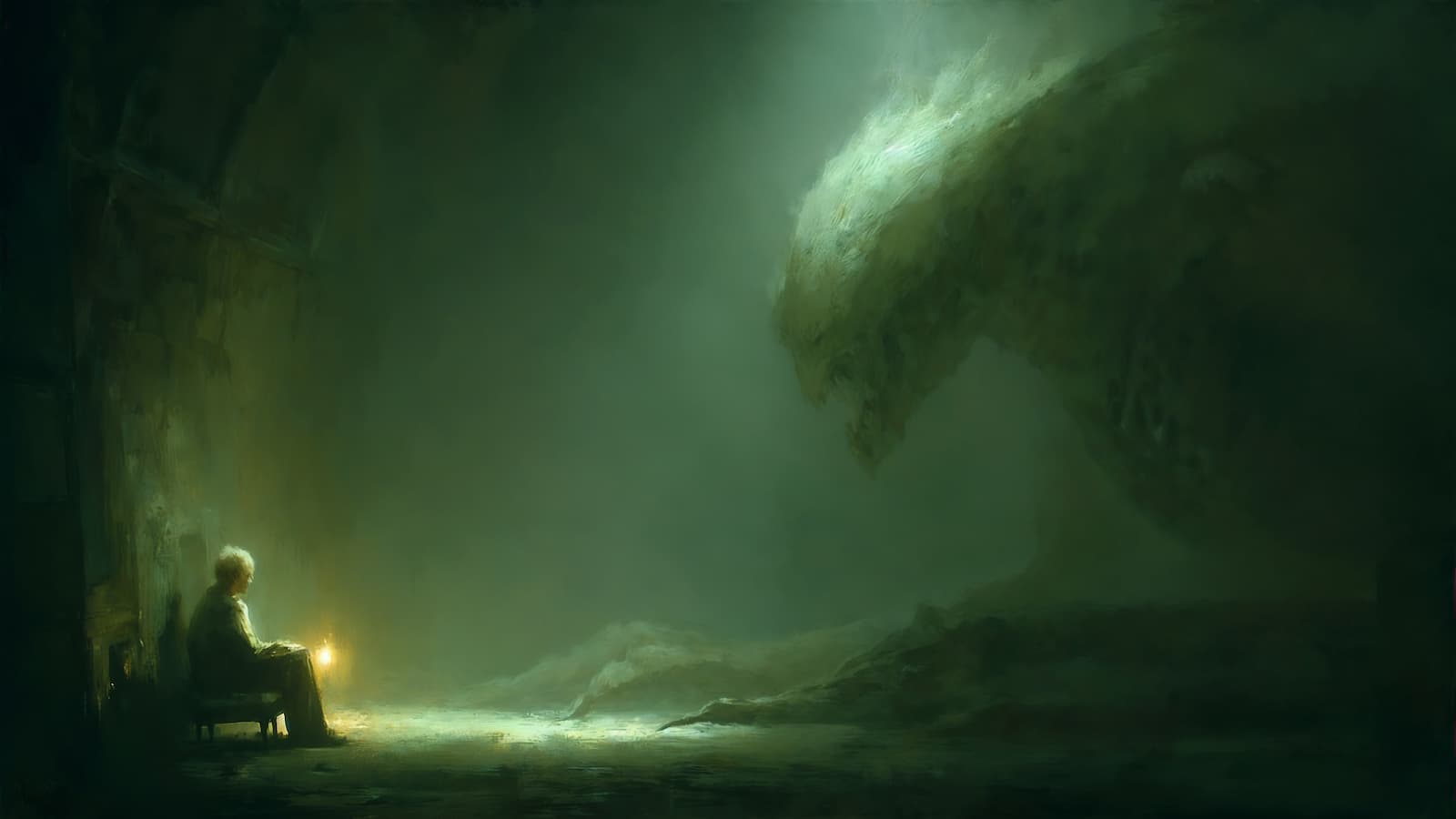
Why This Doesn't Contradict Loosh
Loosh doesn't replace mythology - it explains its persistence. If suffering were meaningless, cultures would abandon it. If sacrifice produced nothing, it would disappear. If fear served no function, it wouldn't be cultivated.
The repeated emergence of parasitic cosmologies suggests that something (symbolic or systemic) benefits from human emotional output. Loosh is the name given to that benefit.
Conclusion: Macro Mirrors Micro
In psychology, we observe narcissists and psychopaths extracting emotional energy from others. In mythology, we observe gods extracting sacrifice. In religion, we observe systems extracting devotion. In metaphysics, we observe structures extracting suffering. Different scales - same pattern. Parasitism works only under one condition: the host doesn't recognize the process.
Whether Loosh is literal energy, symbolic currency or systemic feedback is almost irrelevant. What matters is that the architecture of suffering repeats itself - from the smallest human interaction to the grandest cosmic narrative.
And repetition is never accidental...