The Flyers: Castaneda's Predators and the Foreign Installation in the Human Mind
There is one chapter in Carlos Castaneda's final book that most readers aren't prepared for. Not because it's violent or obscene - but because it's calm in its straightness. Don Juan* delivers perhaps the most disturbing diagnosis in all of esoteric literature, in a voice without panic or drama, as if reading a field report on a species he's studied for centuries.
The chapter is called Mud Shadows. The book is The Active Side of Infinity, published in 1998, the last year of Castaneda's life. And what don Juan describes in that chapter threads so precisely through Monroe's Loosh, through Gnostic cosmology, through Gurdjieff, through the modern neuroscience of rumination - that it's worth treating not as mythology, but as a hypothesis.
The Predators Arrive
Don Juan doesn't ease into the subject. He tells Castaneda directly:
We have a predator that came from the depths of the cosmos and took over the rule of our lives. Human beings are its prisoners. The predator is our lord and master. It has rendered us docile, helpless.
Castaneda's response is the response of most people hearing this for the first time: he dismisses it. He assumes his teacher is speaking metaphorically - that the "predator" is ego, or trauma, or social conditioning. Don Juan lets him sit in that interpretation for a moment. Then he removes it.
No. They are real entities. We call them the flyers.
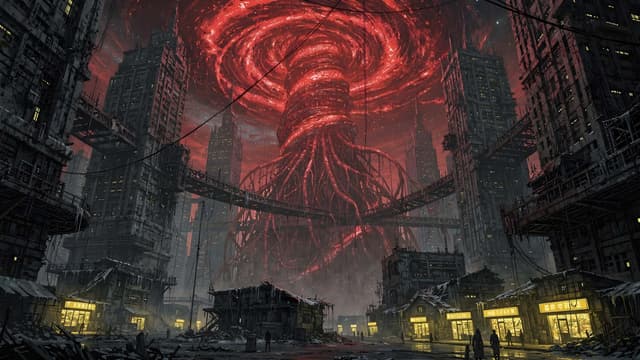
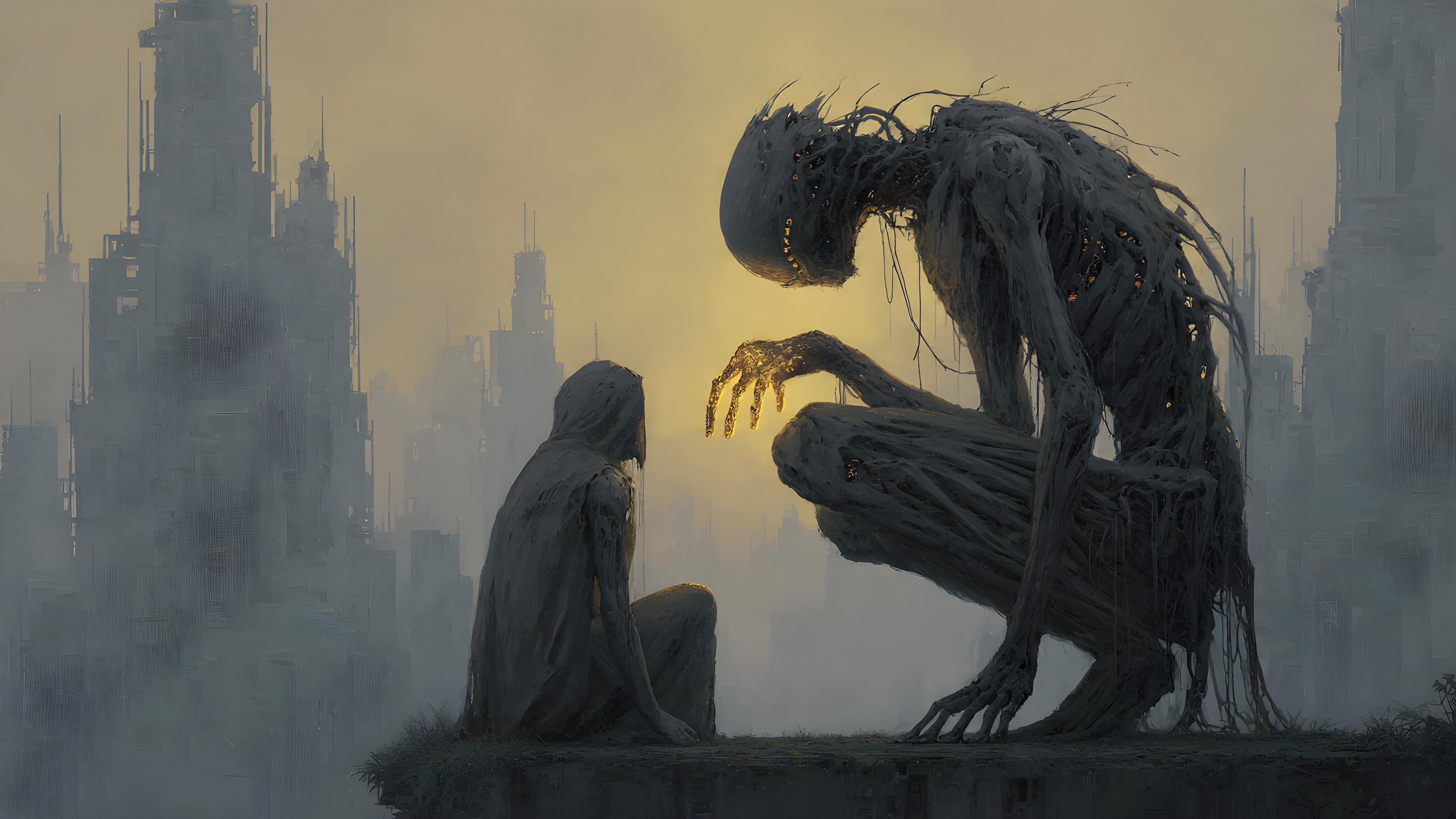
The flyers - in don Juan's Toltec lineage, los voladores - are described as inorganic beings. Not biological organisms. Not spirits in the conventional religious sense. Something else: predatory awareness existing in a frequency adjacent to ordinary human perception. They arrived on this Earth long ago, don Juan explains. And they brought something with them. Something they installed directly into the structure of the human mind.
The Foreign Installation
This is the concept that makes don Juan's account so specific - and so disturbing.
The flyers didn't simply prey on humanity from the outside, the way a parasite attaches to a host's surface. They went deeper. According to don Juan, they gave us our mind. Not the capacity for consciousness - that existed before. What they installed was something else: the inner dialogue. The compulsive self-reflection. The social anxiety, the obsession with appearance, the fear of judgment, the chronic noise that runs behind every waking moment.
Don Juan calls it the foreign installation.
He puts it plainly:
Each of us has two minds. One is completely ours and is like a faint voice that always brings us order, directness, purpose. The other mind is the foreign installation. It brings us conflict, self-importance, doubt, hopelessness.
It's an extraordinarily precise description. Because the foreign installation doesn't feel foreign. It feels like you. It has your memories, your voice, your anxieties. It narrates your life in the first person. It argues on your behalf. It's only through sustained stillness - through what the Toltecs call stopping the internal dialogue - that its architecture becomes visible. And when it does, it becomes clear that this chattering mechanism was not built for your benefit.
It was built to keep you producing.
What the Flyers Feed On
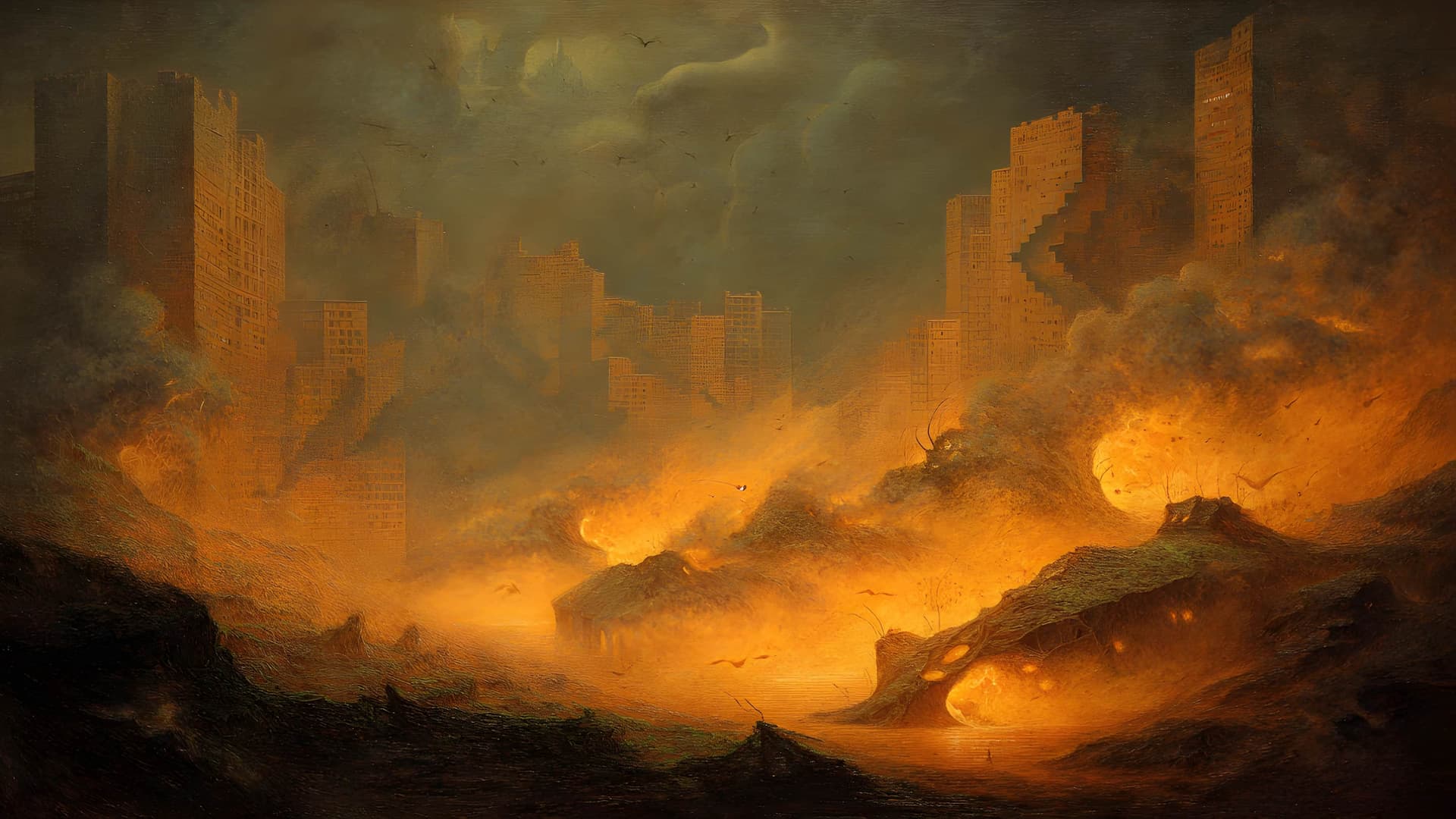
Don Juan is specific about the mechanism. Humans, in the Toltec model, are luminous beings - cocoons of awareness wrapped in filaments of light. The flyers don't consume the whole thing. They eat the outermost layer: a golden, amber-colored band at the periphery of the luminous cocoon.
This outer layer, in don Juan's system, corresponds to something precise: our capacity for depth. For wonder. For direct contact with the world unmediated by the internal monologue.
What remains after the harvest is sufficient to keep us functional. We can work, reproduce, plan, worry, consume. But something has been clipped. We operate, in don Juan's terms, at a fraction of our original range - just enough awareness to generate more of what the flyers need, not enough to perceive the structure of our own captivity.
The mechanism is elegant in the way that all efficient farming is elegant.
The Mind That Is Not Yours
They gave us their mind! Do you hear me? The predators give us their mind, which becomes our mind. The predators' mind is baroque, contradictory, morose, filled with the fear of being discovered any minute now.
Read it again. Because that is also a perfect clinical description of what psychology calls the default mode network - the brain's resting-state activity, responsible for self-referential thought, rumination, social monitoring and the looping replay of past events and future catastrophes.
The default mode network activates when we aren't engaged with an external task. It runs inward, compulsive, loud. It's associated with depression, anxiety, self-criticism and what meditators have always called "the monkey mind." Neuroscience discovered it in the late 1990s and still struggles to explain why a resting brain would spend so much energy running what amounts to a continuous threat-assessment simulation.
Don Juan's answer would be simple: because it's not your mind resting. It's the installation running maintenance.
This Is Where the Loosh Connection Becomes Exact
Robert Monroe encountered the concept from a different angle. His out-of-body research led him to a disturbing conclusion: that emotional energy - Loosh - was being harvested from human beings by non-physical intelligences. He described the Earth as a production environment. Suffering, fear and emotional intensity as the highest-yield output.
Monroe arrived at this through direct experience. Don Juan's lineage arrived at it through centuries of accumulated perceptual training. They are describing the same structure from different positions inside it.
The flyers are Monroe's harvesters. The foreign installation is the mechanism that keeps Loosh production running continuously. The inner dialogue - the anxiety loops, the rumination, the self-doubt, the social performance anxiety - isn't a bug in human consciousness. It's the machinery of the farm.
And like all machinery, it was not built by the people who live inside it.
The Gnostic Archons Recognized the Same Structure
Don Juan mentions this explicitly. When Castaneda presses him on whether these beings have been seen before, he says: yes. The Gnostics called them archons.
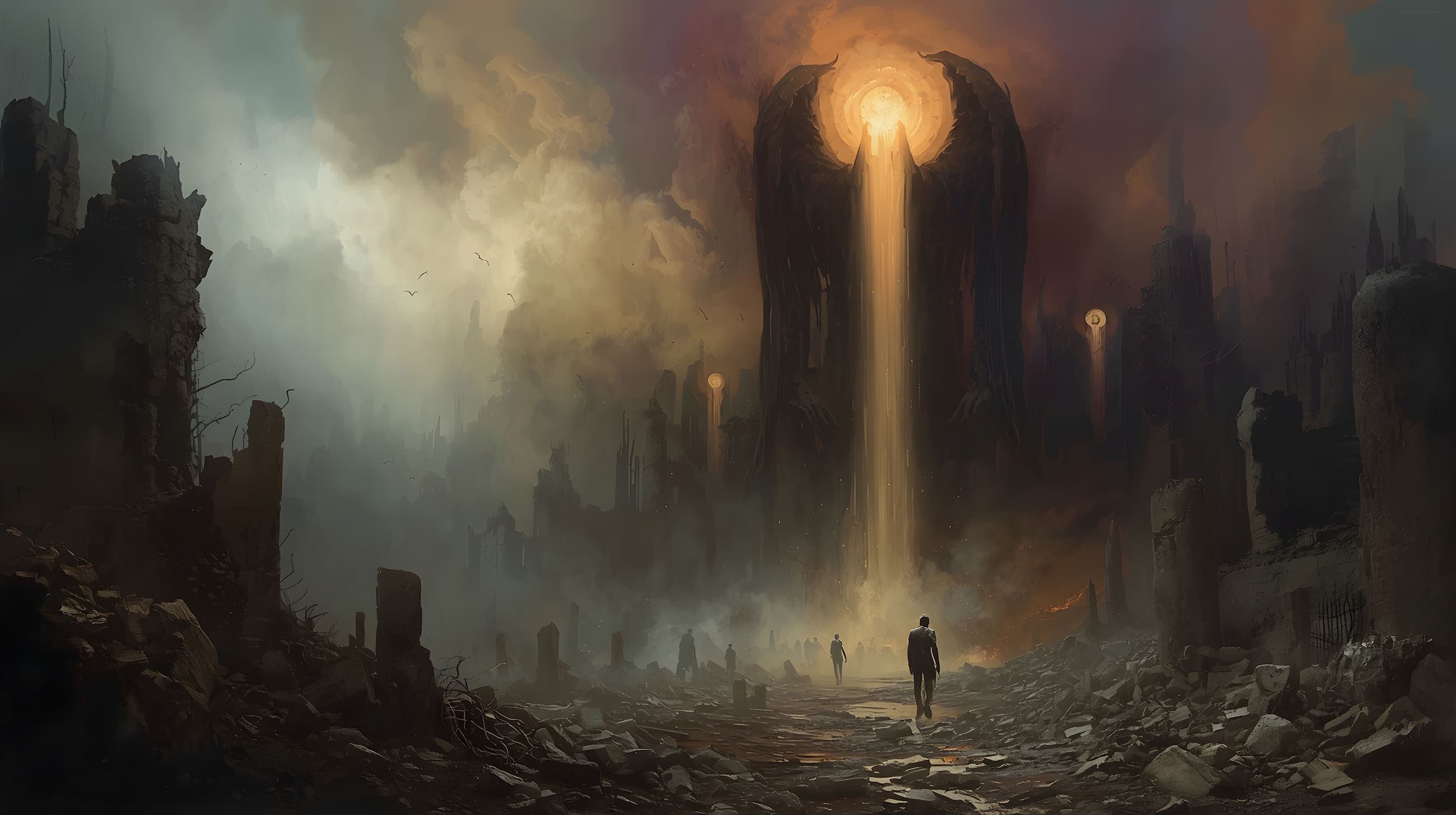
The parallel is structural rather than merely verbal. Gnostic cosmology - particularly in the Nag Hammadi texts - describes archons as subordinate creator beings who construct a false reality and trap human souls within it. They aren't interested in your body. They are interested in the spark of divine awareness you contain. And their entire operation - the physical world, time, suffering, biological drive, the cycle of birth and death - is built to keep that spark producing energy it cannot contain and cannot escape.
The Gnostic Demiurge builds the prison. The archons staff it. The foreign installation is the lock on the cell door - and the most sophisticated part of the system is that the lock is inside your head, and you use it on yourself.
How to Starve the Flyers
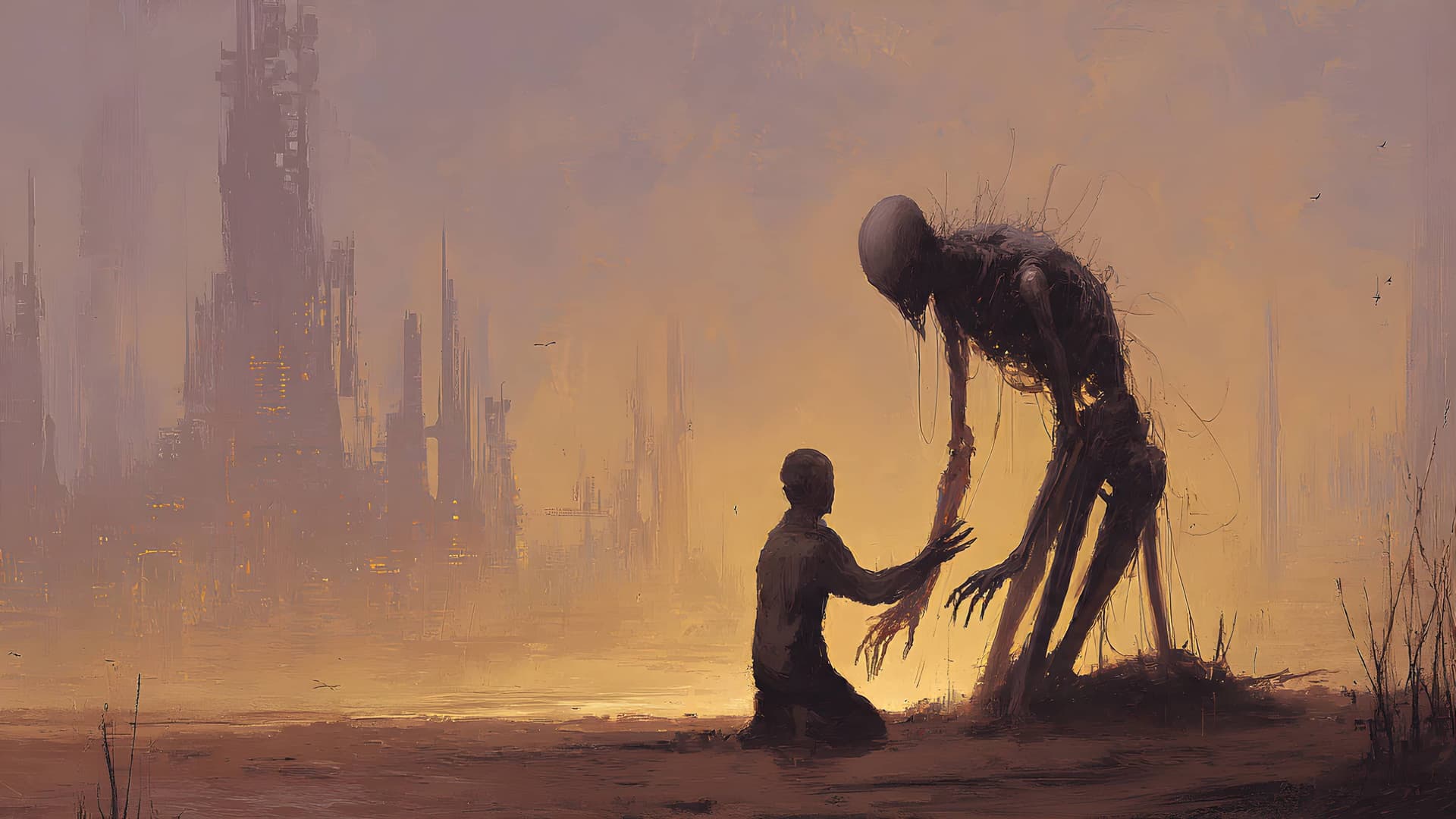
Don Juan doesn't present this as hopeless. He presents it as a problem with a method.
The method is discipline. Specifically: the kind of discipline that interrupts the automatic running of the foreign installation. In the Toltec system this includes:
-
Recapitulation - a sustained practice of consciously revisiting every memory and energetically retrieving what was left behind. Not therapy. Not reframing. A literal retrieval of awareness-energy that was leaked during emotional events. Don Juan describes this as starving the flyers by pulling back what they fed on.
-
Stopping the internal dialogue - not suppression but exhaustion. You engage in activities that consume total attention - stalking, movement, certain physical disciplines - until the compulsive narrator runs out of material and falls silent. In that silence, the foreign installation becomes visible as something separate. Something that can be observed.
-
Controlled folly - acting fully in the world while not being taken by it. Not detachment in the Buddhist sense of withdrawal, but a quality of attention that participates without being consumed. The flyers, don Juan says, cannot feed on someone who acts with full engagement but without self-importance. Self-importance is the premium fuel. Remove it and the harvest drops.
Why Discipline Specifically
Don Juan's explanation for why discipline works is worth examining on its own terms.
He says the flyers cannot tolerate discipline. Not because discipline harms them directly, but because a disciplined being stops producing the specific quality of emotional output they require. The flyers feed on confusion, on the gap between what a person desires and what they have, on self-contradiction and the endless renegotiation of identity.
A person who acts with clarity - not happiness, not positivity, but clarity - generates something different. Don Juan calls it controlled folly: the posture of someone who knows the game and plays it anyway, without being convinced by it.
This isn't passivity. Don Juan was not a saint. Castaneda describes him as sharp, mischievous, occasionally cruel. But beneath the surface volatility was something the flyers could not purchase: a self that had been retrieved from the installation and remained consistently inhabited.
The Question Worth Sitting With
Most people who encounter don Juan's account respond in one of two ways.
The first is dismissal. The flyers are metaphor. The foreign installation is just ego under a dramatic name. The entire framework is the fiction of a novelist who may have fabricated his fieldwork.
The second is immediate, total belief - which is equally useless, because belief without practice changes nothing about the structure.
Don Juan suggests a third response. He calls it controlled abandon: treat the hypothesis as though it were true, and observe what happens. Not because you are certain, but because the experiment is available to you. Stop the internal dialogue for ten minutes. Notice what remains. Notice what resists.
If the foreign installation is real, you will feel it resist. If it's metaphor, you will have had ten minutes of quiet.
Either way, something was learned.
The System Is the Same
Monroe found the farm through out-of-body travel. The Gnostics found it through cosmological revelation. Gavvah, pointed at the same current running beneath conscious life. Even in Slavic esotericism, the same parasitic structure called Larvae is found. Don Juan found it through a lineage of perceptual warriors who had been mapping it for centuries.
What they all describe converges on a single uncomfortable structure: that human suffering isn't random, that awareness is a resource, and that something has made itself invisible by living inside the instrument we use to perceive invisibility.
The installation that observes is also the installation that conceals. That is its elegance.
And that is why every tradition that has seriously engaged with this structure - Toltec, Gnostic, Monroe's framework, the esoteric currents running beneath every major mysticism - has arrived at the same first instruction:
Stop talking to yourself. Not because silence is pleasant. Because the voice that is talking isn't entirely yours.
[*] Don Juan Matus - a Yaqui shaman and the central teacher in Carlos Castaneda's books. Castaneda presented him as a real person, though his historical existence remains unconfirmed. In the Toltec lineage described by Castaneda, don Juan is a nagual - a leader of a group of seers. The conversations in the books span from 1960 to 1973. Whether read as anthropology, fiction, or something in between, don Juan's influence on Western esotericism is substantial.